GroundsVolt, Turning Austin's Organic Waste Into Compost, Living Soil & Mushroom Substrate
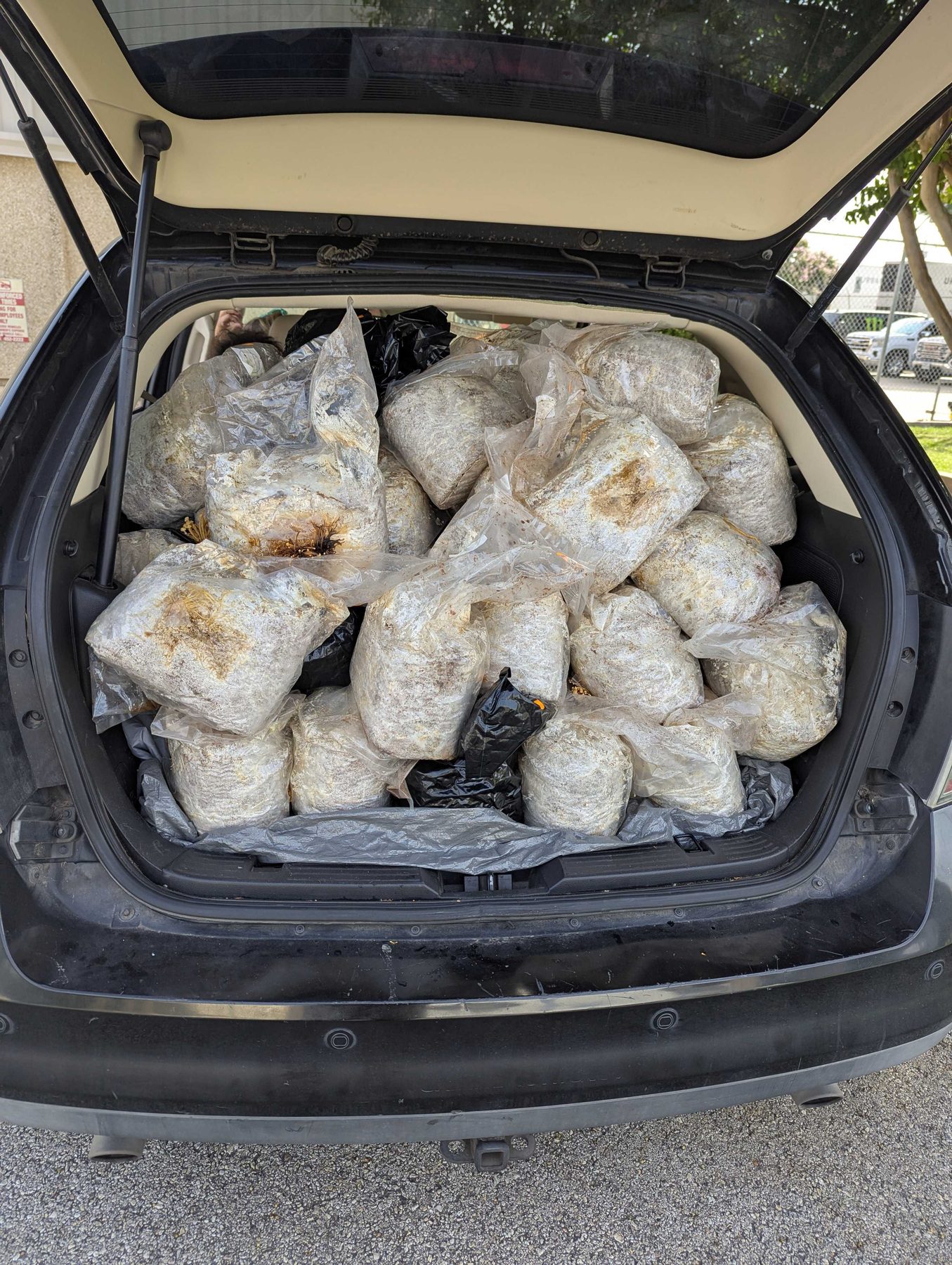
We collect coffee grounds, spent mushroom blocks, produce scraps, and other organic material from cafés, kitchens, juice bars, groceries, and farms. It comes back to growers as compost, living soil, and substrate.
Every morning a city brews coffee and sets aside the densest part of it. Spent grounds are one of the most overlooked materials there is. In a landfill they spend years releasing methane.
Coffee is our biggest stream. It is not our only one. We take spent mushroom blocks from farms, peels and pulp from juice and smoothie bars, produce scraps from kitchens and groceries, and plant material headed for a bin anywhere in this city.
All of it comes back as rich compost and living soil and mushroom substrate for growers across Austin. The grounds behind this morning's cup end up in the soil under someone's dinner. A loop, closed on purpose. Part of the SymbioHaven ecosystem.
Your Overflow Doesn't Disappear.
Put your organics back into circulation.
The grounds, peels, and scraps a kitchen sets out each night go somewhere. Usually that somewhere is a landfill, where they spend years releasing methane. GroundsVolt is the other route.
We pick it up on a rhythm you can count on. Everything that leaves your back door returns as compost, living soil, and substrate growing food and mushrooms in this same city. A café that serves its neighborhood every morning can also feed it. So can a juice bar, a grocery, or a farm.
Your stream is handled. Your customers get a story worth telling. And you hold a place in a loop that gives something back. We keep it fair, keep it local, and route ten percent of every job to a creek or park cleanup.
Processes
From Overflow to Something Growing
GroundsVolt works in layered conversions. Each one takes a form of organic overflow and returns it as something that supports life. Three are running now. The fourth is the frontier, and we will always tell you which is which.
Compost & Living Soil
(running now)
Coffee grounds, produce scraps, peels, and other organics become rich compost and living soil. Made from plants and fungi alone. Sold to growers, nurseries, landscapers, and gardeners across Austin.
Mushroom Substrate
(running now)
Spent grounds and organic matter become prepared substrate for growing gourmet mushrooms. It is the input cultivators grow on, including our own ArchiFarm. Overflow in, mushrooms out.
Diversion & Collection
(running now)
The service under all of it. Reliable pickup of coffee grounds, spent mushroom blocks, produce and fruit scraps, and other organic material. We collect from cafés, kitchens, juice and smoothie bars, groceries, and farms.
The Materials & Energy Frontier
(experiments, honestly labeled)
Every stream we add widens the palette. Grounds, peels, and plant material are ingredients, and the more of them we gather, the richer the recipes get. We are working toward alternative leathers, biochar through pyrolysis, pecan and sunflower milks, and small-scale energy from organic byproducts. These are live experiments rather than shelf products.
Network
A Network for Overflow and Return
GroundsVolt is the metabolism of a larger ecosystem. It connects cafés, kitchens, juice bars, groceries, farms, and growers, so organic overflow travels to wherever it is most useful. Two sides, one loop.
Subsection 1, Collection & Routing Gather first, use everything We collect grounds, blocks, peels, and scraps cleanly and on a schedule you can count on. Then we route each stream to the conversion it suits best. Simple pickup, easy on your team.
Subsection 2, Products for Growers Regenerated inputs, locally The other side of the loop. Compost, living soil, and mushroom substrate for nurseries, landscapers, urban farms, and home growers. Regenerated from local material and priced under bagged commercial products.
Subsection 3, Feeding the Ecosystem Shared inputs, shared purpose Diverted material also feeds sister ventures. Substrate goes to ArchiFarm. Soil goes to Roses for Residents and community green spaces. Wonder Courier moves it between them. One kitchen's overflow ends up supporting work across the whole ecosystem.
Subsection 4, The Regenerative Edge Learning what overflow can become We keep experimenting to find where each stream does the most good. Biochar, alternative materials, small-scale energy. And we always say plainly which results are products today and which are still tests.
The Loop in Motion, Video Coming Soon
A short walkthrough is on the way. A pickup, compost and substrate being made, and the outputs heading back out to growers. You will be able to watch the loop close before you reach out.
Put Your Overflow Back to Work
Where to start. Hand off your organics, or grow with what we make.
Column 1, Kitchens, Cafés, Bars & Farms Coffee grounds, spent mushroom blocks, peels, pulp, produce scraps. If it is organic and piling up every night, start a reliable pickup. One bin to begin. You get a cleaner operation, a story your customers genuinely care about, and material that comes back as soil growing food in your own neighborhood.
Column 2, Growers & Gardeners Need compost, living soil, or mushroom substrate? Grab a bag of what we have regenerated from local material. Priced under commercial, and better on every axis. You pay less, it is local and alive, and ten percent of it cleans a creek.
Column 3, Ecosystem & Community Have an organic stream we have not tapped yet? Or a project that could use regenerated inputs? Let's design a route together. If it is organic and headed for a bin, we probably want it. Use the contact form, or call (512) 808-0153.
CTA line: Everything circulates., Start a pickup · Buy compost/substrate · Partner up
Waste → Regeneration